

 Shop Lighting
Natural materials are back in a serious way, as a reaction against interiors that have become a bit too slick, too sealed, too perfect. Lighting is part of that shift. Stone, timber, rattan, alabaster and opal glass all bring something that a flatter, more manufactured finish cannot, texture and irregularity.
That matters because lighting is never only about illumination. During the day, a fitting sits in the room as an object. At night, it changes mood, depth and atmosphere. Natural materials do both jobs well. They hold their own when switched off, then soften a space once lit.
There is also a wider design reason, research around biophilic interiors suggests people tend to respond well to spaces that bring in natural references, materials, textures and forms linked to the outdoors, with evidence pointing towards benefits for stress and overall sense of wellbeing. This helps explain why timber, stone and other tactile finishes feel so right in domestic spaces.
Why it works so well in lighting
Natural materials change the feel of light itself.
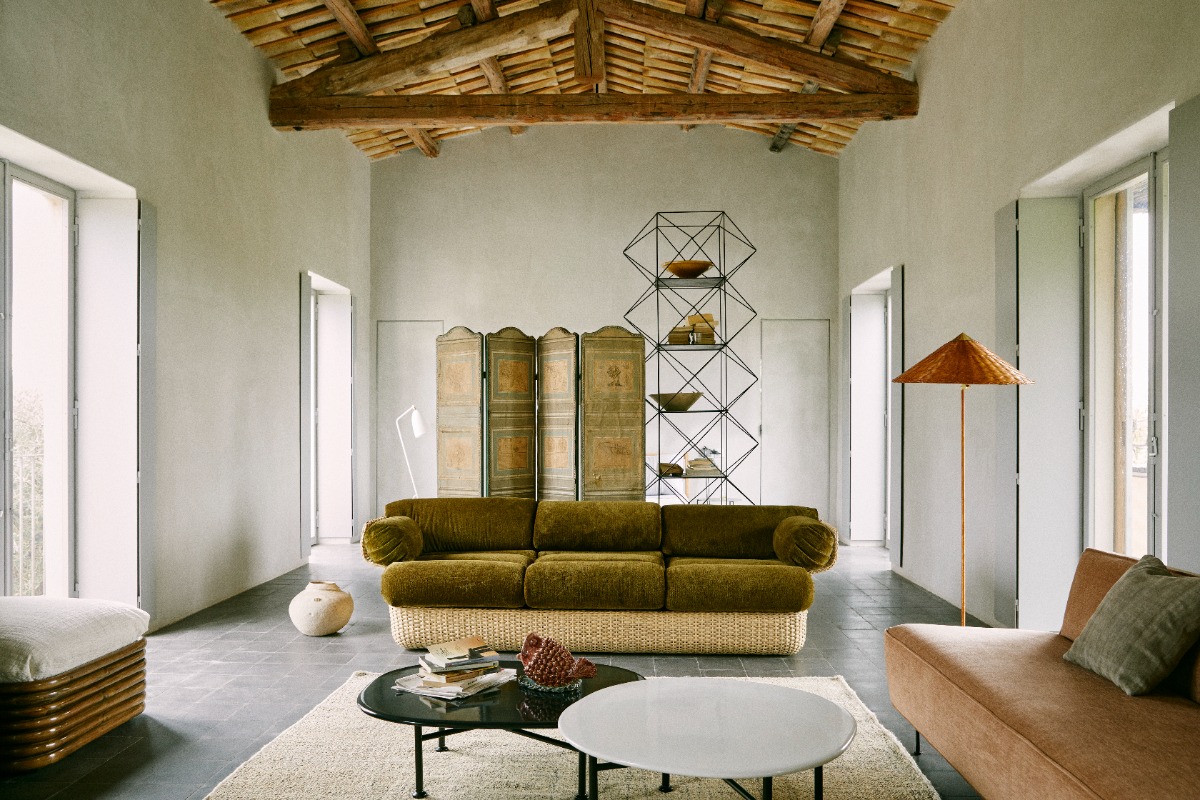
Timber tends to make light feel softer and more domestic. Even in large pendants, wood rarely feels cold. It adds warmth before the lamp is even switched on. Stone does almost the opposite. It brings weight and density, which is why marble and alabaster can make a light feel more architectural.
Woven materials are useful in another way. They loosen a scheme up. In rooms with hard edges, cabinetry, glazing, and sharper lines, rattan or braided shades stop everything from becoming too exact. Then there is opal glass, which is probably one of the easiest ways to keep a scheme calm. It diffuses the light, cuts glare and pairs naturally with wood and stone without feeling themed.
How to bring it in without overdoing it
The easiest way to make this trend work is not to treat it like a theme. You do not need a room full of wood, stone and woven finishes all competing for attention.
Instead, look at what is already there. A timber dining table might want a pendant that picks up on grain or tone. A plaster wall or stone worktop might suit travertine or alabaster. If the room already has plenty of texture through furniture and textiles, an opal glass lamp with a wooden base may be enough.
It also helps to mix natural materials rather than match them too closely. Pale birch, smoked oak, linen, stone and ceramic usually sit together better than a room where every finish is trying to be the exact same shade.
Lighting to look at for the natural materials trend
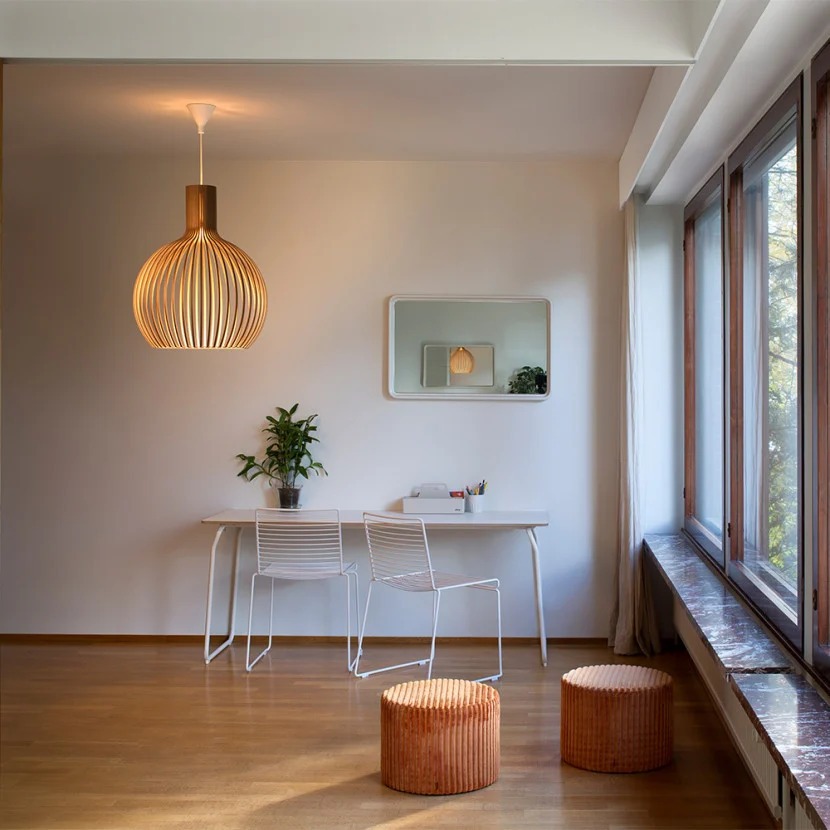
Secto Octo 4240 Pendant Light
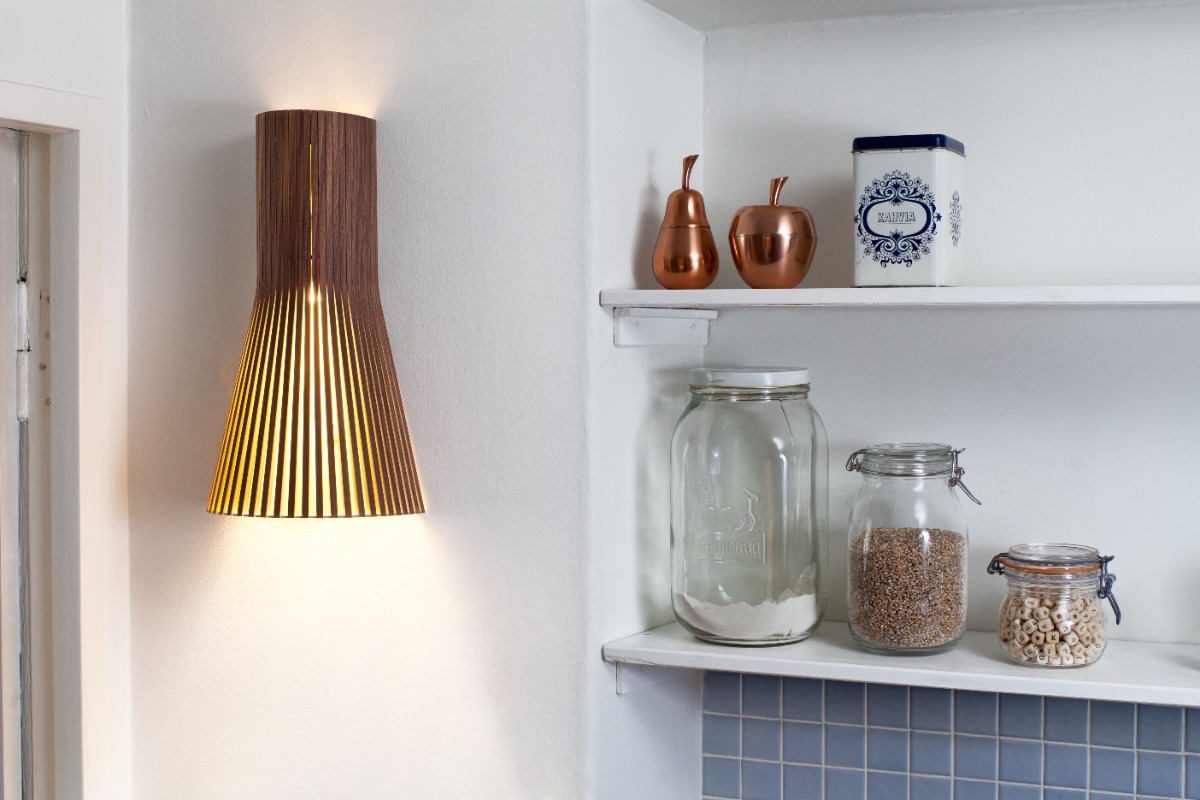
The Octo 4240 is one of those pieces that has become a reference point for a reason. Handmade from PEFC-certified form-pressed birch, it has scale but never feels heavy. The open slatted shade lets light pass through and around it, so you get presence without bulk. Over a dining table or in a stairwell, it does a lot of work without making the room feel crowded.
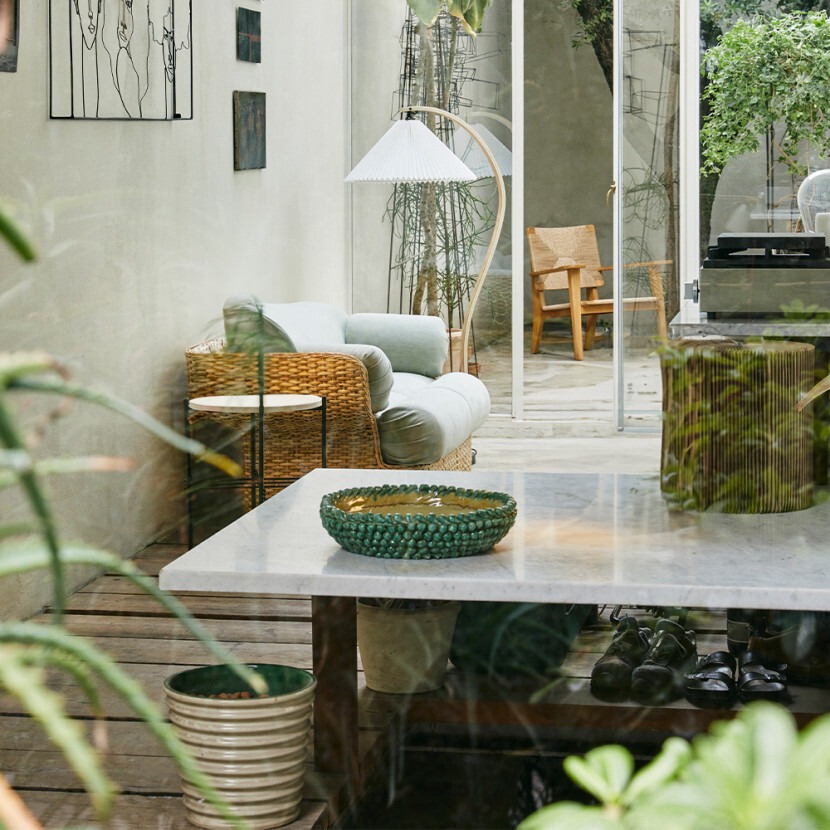
Gubi Timberline Floor Lamp
Timberline is a softer, quieter take on the trend. The mix of oak, birch, canvas and cast iron gives it substance, but it still reads as easy and understated rather than rustic. It is especially good in rooms that need warmth but do not want anything overly decorative. The materials do the talking, and they do not need much help.
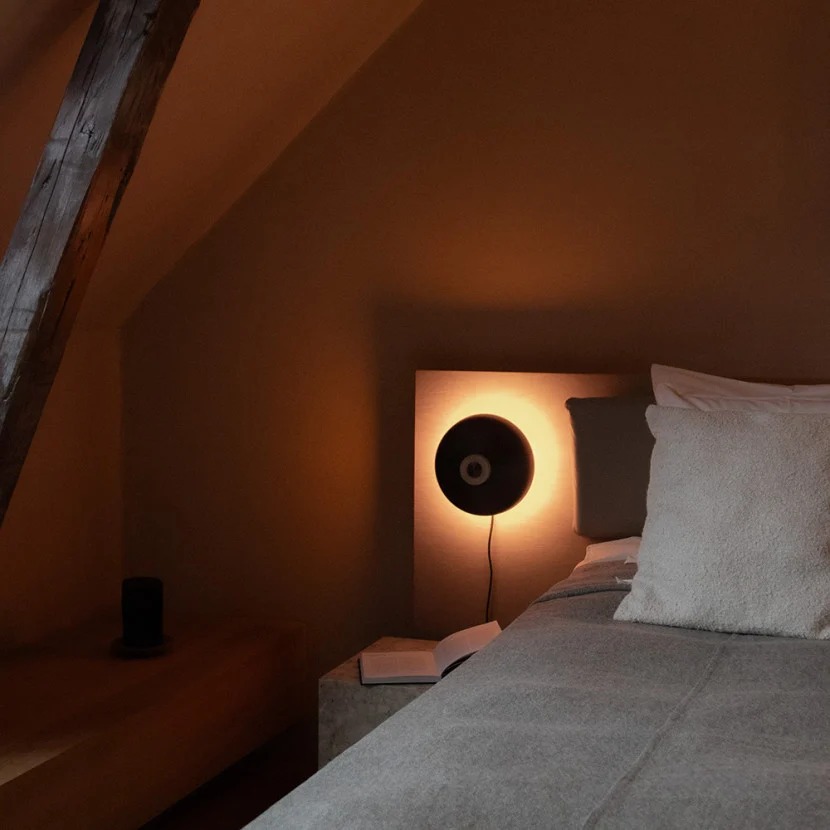
Audo Copenhagen Reverse LED Wall Light
If you want something more sculptural, Reverse is a strong choice. The travertine base has a natural porosity and variation that gives it character straight away, while the bronzed metal shade keeps the overall shape sharp. It is a neat example of how natural materials can feel contemporary rather than earthy in an obvious way.
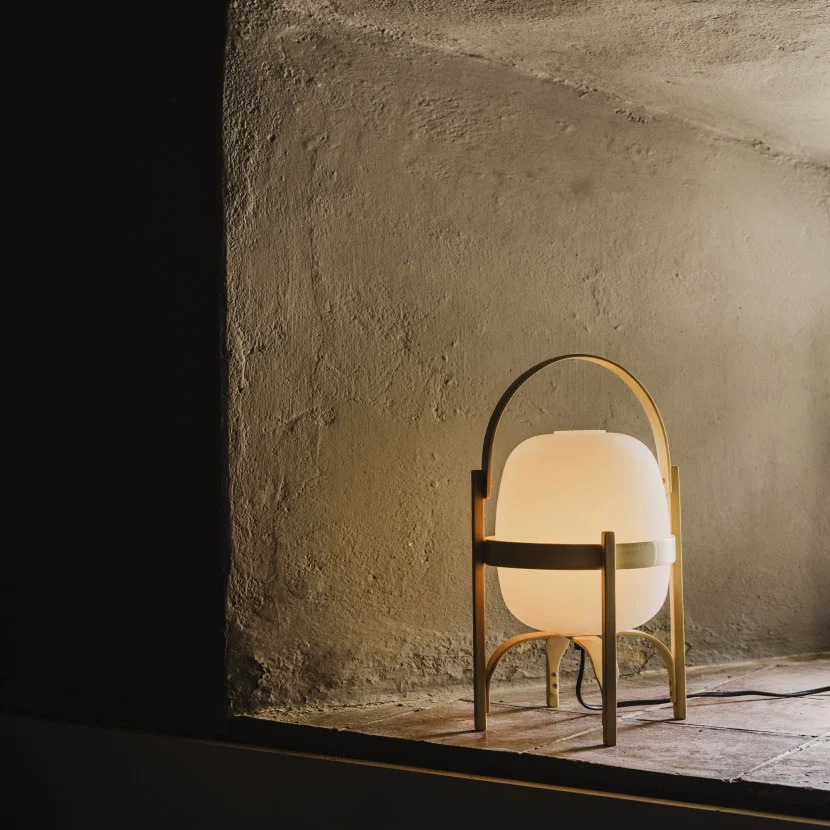
Santa & Cole Cestita Table Lamp
Cestita has a warmth that is hard to fake. The polished cherry wood frame and opal shade feel familiar in the best sense, almost lantern-like, but not old-fashioned. It works especially well on sideboards, shelves and bedside tables where you want a light to feel settled, not staged.
Tom Raffield Skipper Pendant
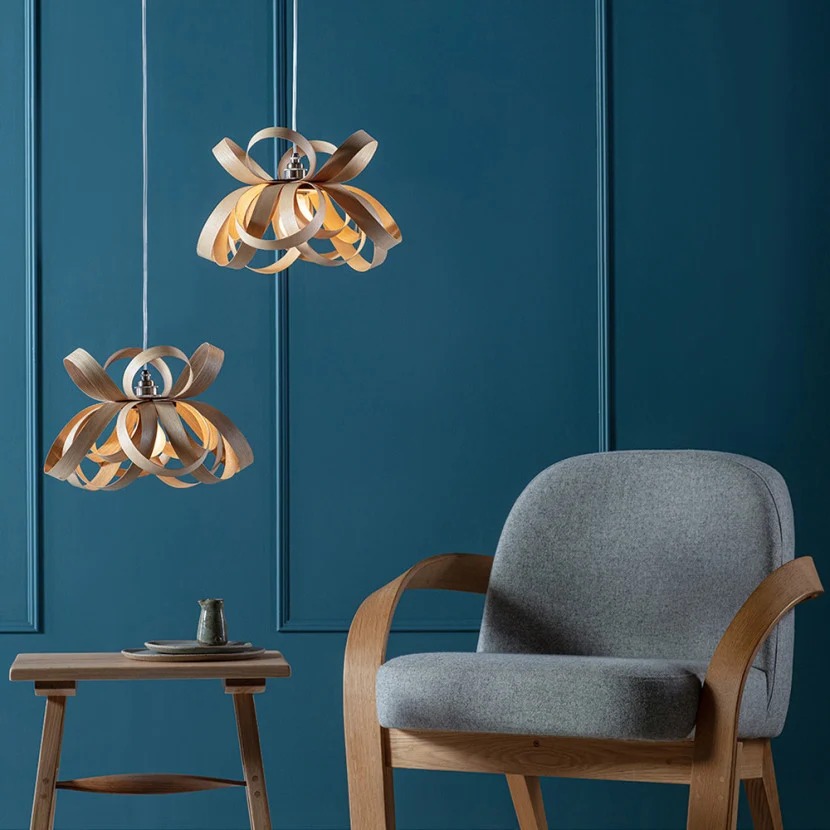
Tom Raffield’s Skipper Pendant brings a more handcrafted edge to the trend. Its steam-bent timber loops give it movement and shadow play, and there is enough openness in the design to stop it feeling dense. It suits spaces that need a bit more shape and rhythm, especially above a table or in a corner that needs drawing out.
Ferm Living Oeste LED Table Lamp
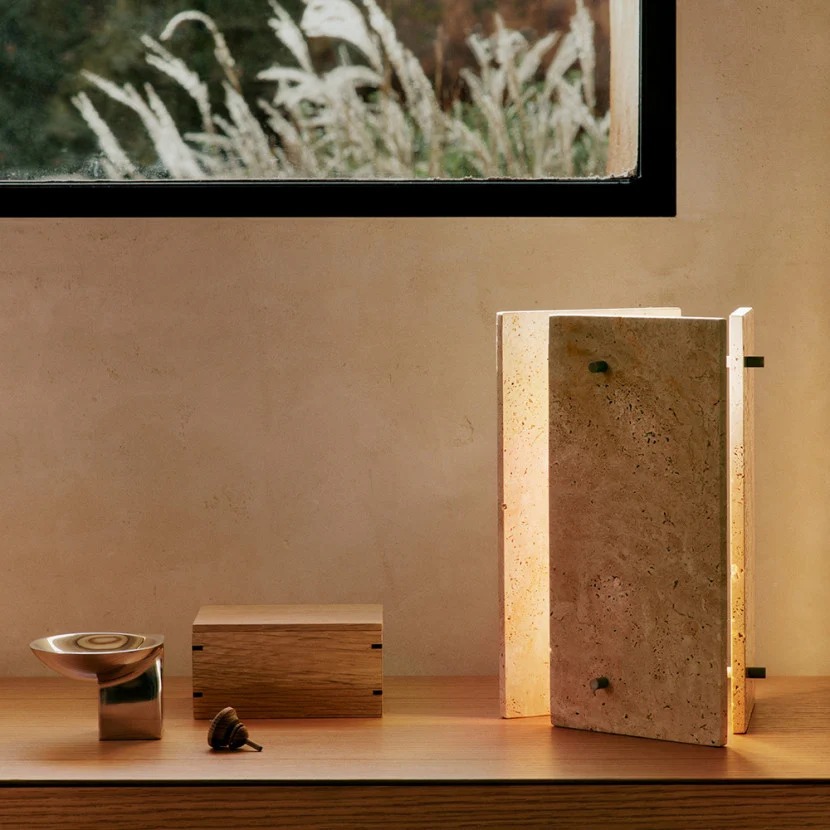
Oeste has three travertine panels set around a central light source, so it feels solid and architectural, but the glow is soft rather than stark. It is a good fit for this trend because it shows how stone can be used in a way that feels warm, atmospheric and a little quieter than polished marble often does.
Mater Terho Pendant Light
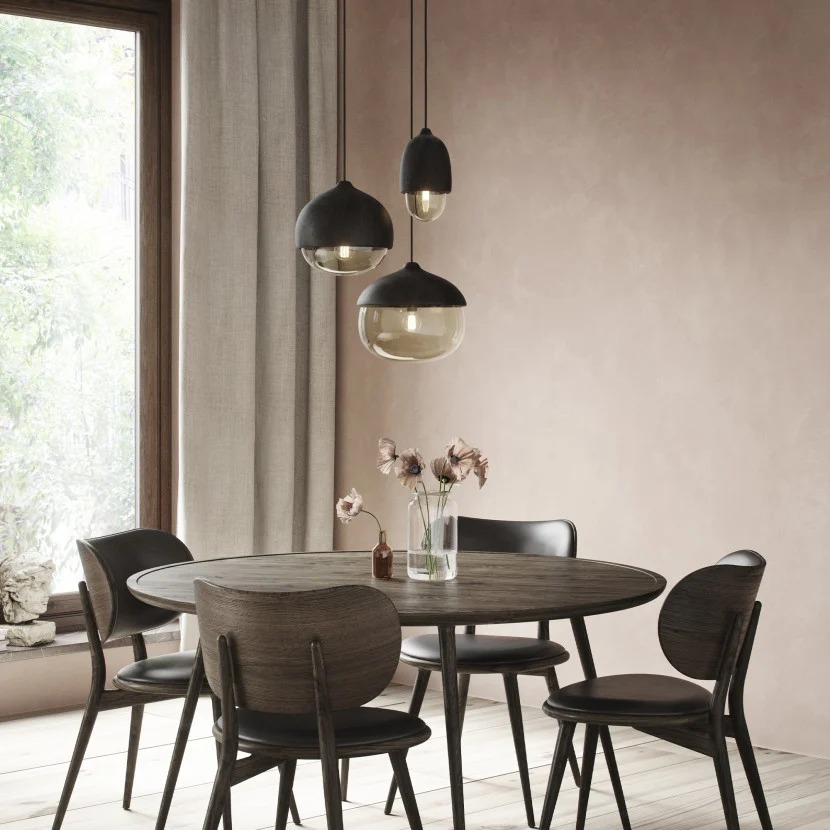
Terho combines mouth-blown opal glass and linden wood, giving it a natural softness. The acorn-like shape is a subtle nod to nature without tipping into the literal. It works well singly beside a bed, or in a cluster where you want something compact but still tactile.
What makes natural materials so effective in lighting is that they make a room feel less processed. That could mean the open grain of birch, the heft of travertine, the softness of canvas, or the quiet glow of opal glass. None of it needs to shout.
A good light in a natural material does not just brighten the room. It gives it texture, weight and a bit more soul. That is why this trend has lasted longer than a quick seasonal look. Done well, it does not feel like a trend at all. It just feels right.



 100% Authentic products
 Free delivery on orders over £100 (UK Mainland)
 14 Days Return Policy
 Overseas Shipping Available
 Over 70 Designer Brands
 Excellent Customer Service